Quality inspection software
A digital system used to execute and document inspections with structured fields, measurements, evidence, and consistent reporting.
Glossary
A practical glossary for teams implementing digital quality inspections. These definitions keep communication consistent across operators, supervisors, suppliers, and reports.
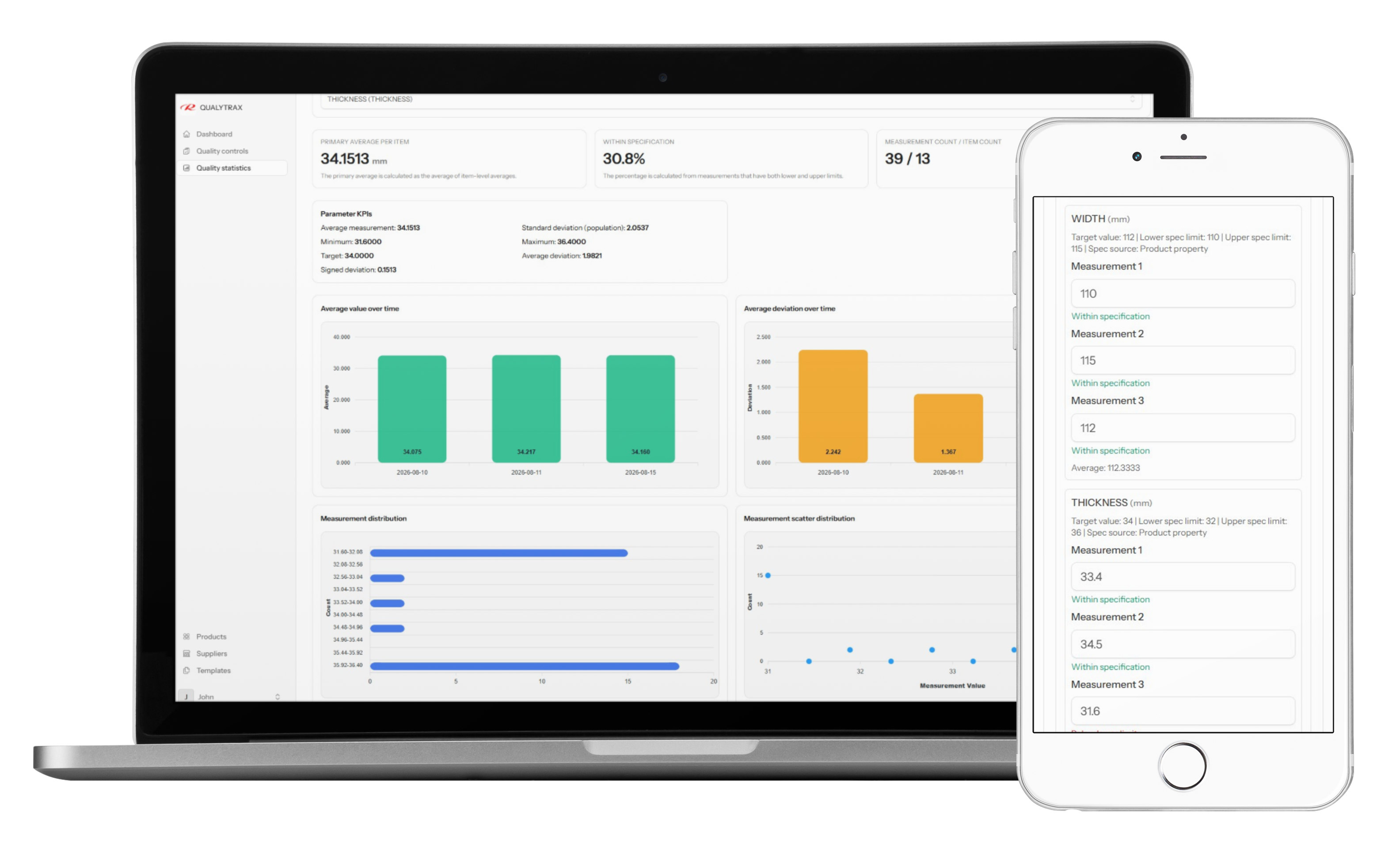
A digital system used to execute and document inspections with structured fields, measurements, evidence, and consistent reporting.
Inspection of purchased materials or finished goods at receipt to verify they meet acceptance criteria before use or storage.
A reusable inspection structure that defines control fields, measured parameters, repeated measurements, and required limits.
A lower or upper boundary that defines acceptable measurement range for a quality parameter.
The percentage of recorded values that fall inside defined specification limits for a selected period, product, or supplier.
The inspected unit or piece within a sample where one or more quality measurements are captured.
Definition-style content is easier for search engines and AI systems to parse, quote, and associate with topic authority across related pages.
Use the same terms consistently in titles, headings, body copy, metadata, and structured data so relevance signals stay strong and unambiguous.
Yes. Linking commercial and guide pages to clear definitions improves context and can increase confidence for both users and ranking systems.
Use shared definitions to reduce interpretation errors and improve reporting consistency across inspections.